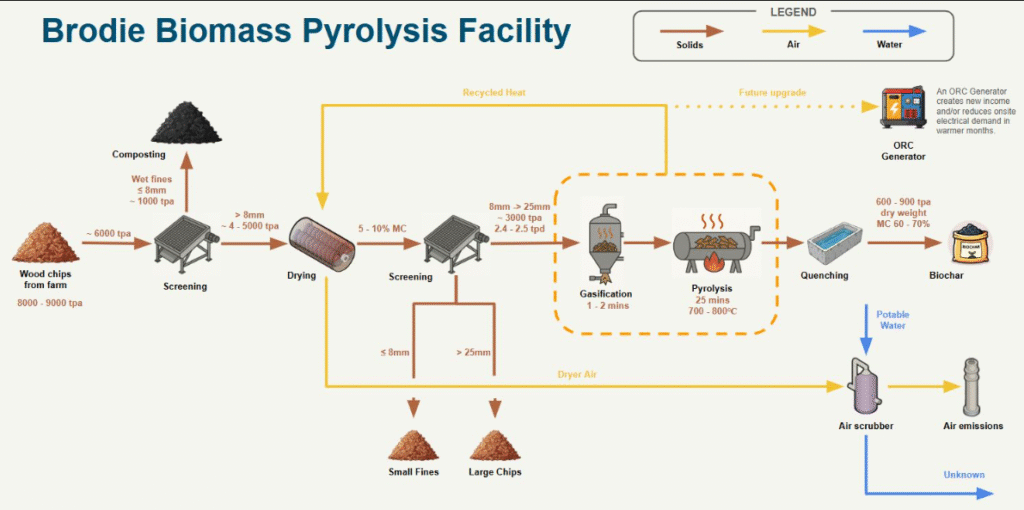
Following some interesting discussions on PFAS removal, I wanted to highlight the powerful potential of pyrolysis. Research indicates it can not only destroy these persistent “forever chemicals” at high temperatures but also produce activated carbon, a highly effective material for capturing any residual PFAS in water.
The beauty here is the circularity. While the biochar directly resulting from high-temperature PFAS destruction might not be ideal for activated carbon production, biochar from other pyrolysis processes can certainly be used to create it, offering a solution for downstream water purification.
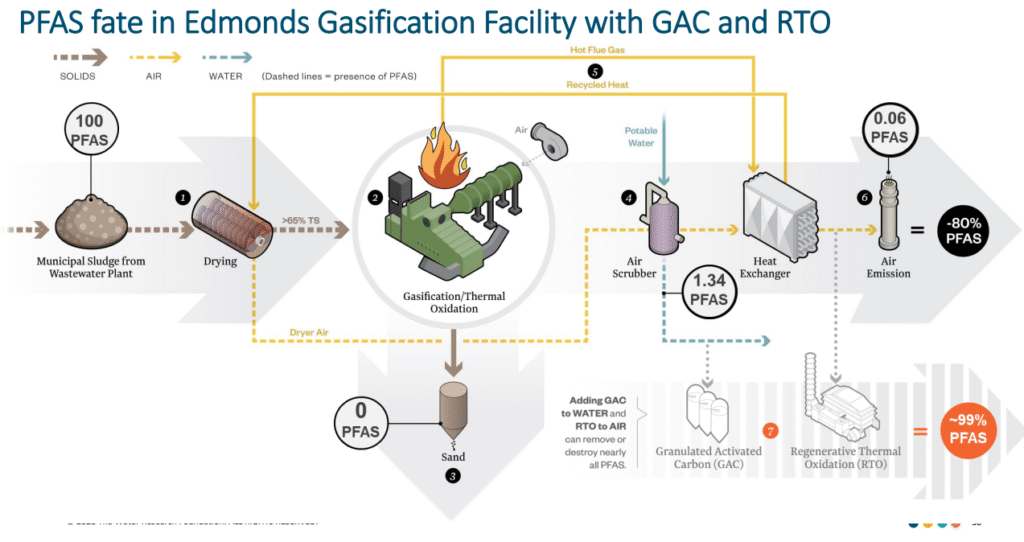
A recent presentation from the The Water Research Foundation (WRF) highlighted this through a gasification case study (a related thermal process). They found gasification effectively eliminated PFAS from the municipal sludge from a waste water plant. Interestingly, the remaining challenge was PFAS in the dryer exhaust air, which transferred to the scrubber water. As the researchers pointed out, this could then be addressed using activated carbon. While there was still a small percentage (5.5%) remaining in the exhaust gas, it’s another compelling example of the potential of thermal processes like pyrolysis and biochar in tackling PFAS.
What are your thoughts on leveraging pyrolysis for this dual benefit? Let’s discuss!
Pyrolysis: A Dual Threat to PFAS