
Biochar Operator Course
A 100% virtual, self-paced training for anyone who wants to understand what a well-run biochar facility looks like.

About the Course
The Biochar Operator Course is a comprehensive, on-demand professional course designed for the people responsible for running biochar systems in real-world conditions. It bridges the gap between high-level engineering and the daily realities of the plant floor.
Built in partnership by IBI and Lyntra, and reviewed by an expert advisory committee, this course gives operators, technical teams, and project stakeholders the foundation they need to run safer, more reliable, and more bankable facilities.
What’s inside:
- 7 modules covering everything from pyrolysis science and feedstock management to safety, troubleshooting, maintenance, quality standards, and carbon credit calculations
- 30 on-demand videos you can access 24/7 at your own pace
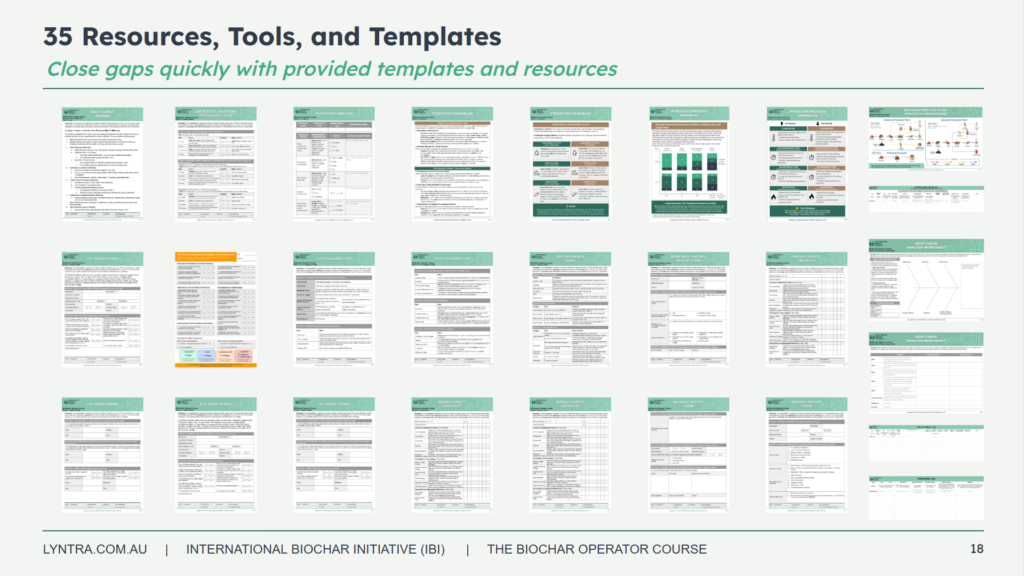
- 35 practical resources, tools, and templates — SOPs, incident reporting forms, daily walkaround checklists, root cause analysis worksheets, operator logs, and more
- A final exam (80% to pass, unlimited attempts) leading to an IBI-backed certificate of completion
Course Webinar
Sample the Course
Receive the first session of Module 2 in your inbox.
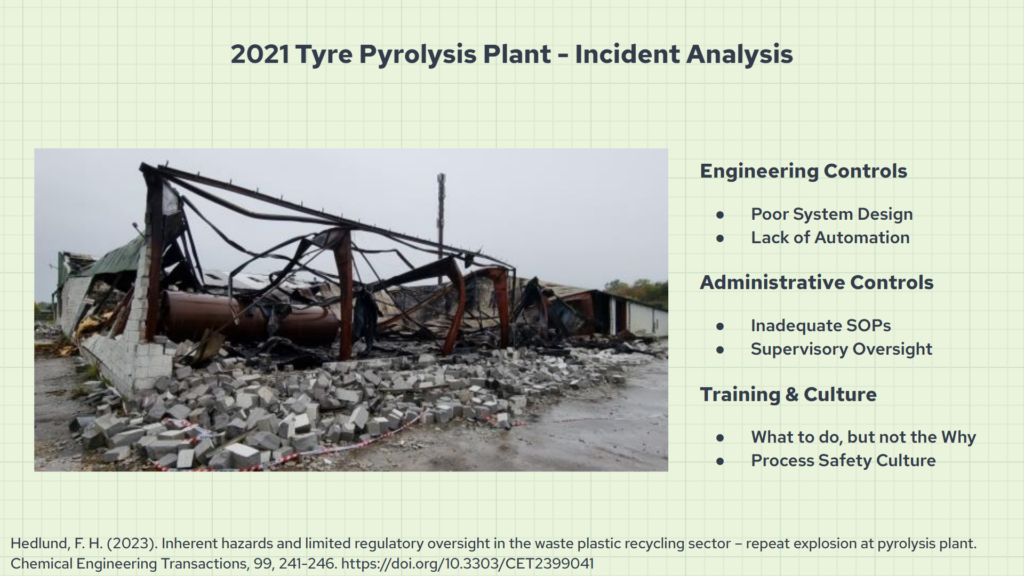
Through real-world case studies and practical examples, this lesson highlights how safe plant operation depends on proper design, maintenance, training, and operational discipline across every stage of the pyrolysis process.
What You'll Learn
Module 1 — Foundational Principles
Understand the science of pyrolysis, the role of feedstock, the range of products (biochar, bio-oil, syngas, and more), and the typical equipment found in a pyrolysis plant.
Videos
1.1 – Introduction
1.2 – Science of biochar production
1.3 – Feedstock
1.4 – Products
1.5 – Pyrolysis process
Module 2 — Safety & Compliance
Break down operational risks, learn the hierarchy of controls, master startup and shutdown procedures, lockout/tagout protocols, and emergency response — drawing on real-world incidents so you never repeat them.
Videos
2.1 – Safety overview
2.2 – Syngas
2.3 – Bio-oil
2.4 – Dust
2.5 – Start up & shut down
2.6 – Lock out tag out
2.7 – Safety in action
Module 3 — Plant Operations
Day-to-day routines, standard operating procedures, the daily huddle, instruments and interfaces, and how to read sensor data to catch problems early.
Videos
3.1 – A day in the life
3.2 – Standard operating procedures
3.3 – Instruments
Module 4 — Troubleshooting & Optimization
Root cause analysis using the seven basic quality tools, mass and energy balance, data-driven decision making, and a hands-on case study to put it all together.
Videos
4.1 – Tar management
4.2 – Root Cause Analysis
4.3 – Data driven decisions
4.4 – Mass & Energy Balance
4.5 – Case study walkthrough
4.6 – Case study walkthrough answers
Module 5 — Maintenance & Reliability
How operators serve as the first line of defense against breakdowns, the production-maintenance paradox, preventative maintenance, and how to measure and improve Overall Equipment Effectiveness (OEE).
Videos
5.1 – The First Line of Defence
5.2 – The Production vs. Maintenance Paradox
5.3 – Mastering Overall Equipment Effectiveness (OEE)
Module 6 — Quality Control & Product Testing
Field testing, representative sampling (including the cone-and-quarter method), how to read a certificate of analysis, and proper biochar storage and handling.
Videos
6.1 – Biochar Quality Standards
6.2 – Sampling and basic field testing
6.3 – Certificate of Analysis
6.4 – Biochar Storage and Handling
Module 7 — Carbon Credits & Market Context
Calculate carbon credit output using established methodologies, understand how operational decisions affect credit volume and plant profitability, and get a grounded view of where the biochar market is headed.
Videos
7.1 – Basic Carbon Credits and Environmental Impact
7.2 – Applications and Customer Requirements
Advisory Committee

What You'll Receive
Module 1 — Foundational Principles
- Pyrolysis variables – Resource
- Feedstock Variables – Resource
- Feedstock check sheet – Template
- Biochar pyrolysis plant process flow diagram (PFD) – Resource
Module 2 — Safety & Compliance
- 1# Pyrolysis incident report
- 2# Pyrolysis incident report
- 25 – point combustable dust safety self assessment
- Weekly Safety Checklist – Template
- Emergency shutdown procedure – Template
- Incident report form – Template
- Near miss / Hazard report form – Template
- Hot work permit – Template
- PPE reference guide – Resource
Module 3 — Plant Operations
- Daily operator checklist – Template
- Handover log
- Hourly log
- Maintenance observation log
- Daily huddle agenda – Resource
- SOP – Template
- Example SOP – Clog clearing
Module 4 — Troubleshooting & Optimization
- Pyrolysis plant troubleshooting matrix – Resource
- Seven basic tools of quality – Resource
- Root cause analysis worksheet – Template
- Moisture content energy balance
- Mass & Energy balance – Calculator
- Case study workbook Questions
- Case Study Additional Info
- Case study workbook Q&A
Module 5 — Maintenance & Reliability
- Overall Equipment Effectiveness (OEE) – Resource
Module 6 — Quality Control & Product Testing
- Biochar certification requirements
- Biochar lab results and reactor impact – Resource
- Example CoA
Module 7 — Carbon Credits & Market Context
- IBI Biochar manual for carbon removal
Interested in learning more?