
The Problem
- Strict Off-Take Specifications: The facility needed to process output from four commercial pyrolysis reactors to fulfill a major off-take contract that demanded exact, tight material specifications.
- Contamination & Steel Risks: Raw biochar/rCB carried residual wire fragments and oversized clinkers, creating severe downstream contamination risks and equipment jamming.
- Manual Bottlenecks & Exposure: Legacy material handling lacked continuous automation, introducing cross-contamination risks and excessive operator exposure in hazardous dust zones.
- Lack of Quality Safeguards: The existing setup had no mechanism to dynamically isolate out-of-spec batches before they reached final packaging.
The Solution
- Continuous Conveying Architecture: Engineered, specified, and procured an integrated materials handling train using a combination of heavy-duty screw conveyors and pneumatic transport systems.
- Precision Separation & Milling: Installed high-intensity magnetic steel separators to eliminate wire contamination, paired with vibratory sieves to guarantee a uniform maximum particle size of 1mm.
- DCS Automation & Redundancy: Fully integrated the new equipment into the plant Distributed Control System (DCS), building in redundant flow paths and automatic diversion valves.
- Real-Time Quality Isolation: Programmed smart control loops that automatically trip and isolate process lines the instant operating parameters drift or product quality tolerances are missed.
- Hazardous Area Design: Engineered the entire footprint to meet strict AS/NZS hazardous area standards, incorporating dust-tight containment, explosion protection, and grounding systems.
The Outcome
- Guaranteed Product Quality: Delivered an end-to-end processing and packaging plant that reliably produces 100% compliant, fine-grade rCB ready for market distribution.
- Turnkey System Redundancy: Eliminated single points of failure across the solids handling loop, maximizing plant uptime and protecting upstream reactor throughput.
- Enhanced Plant Safety: Significantly reduced dust exposure and operational hazards through sealed pneumatic transfer and compliant hazardous area design.
- Operational Autonomy: Reduced reliance on manual intervention while giving plant operators full SCADA/DCS visibility and automatic safeguards over final product quality.
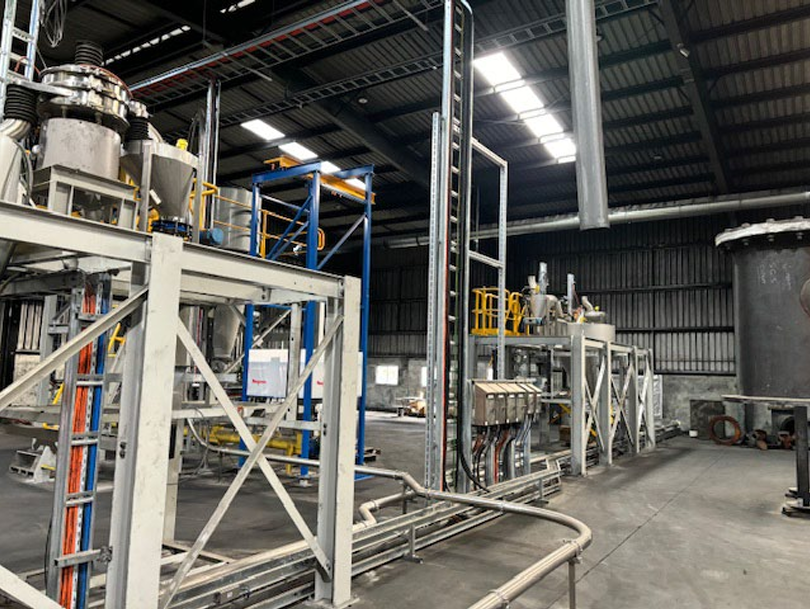
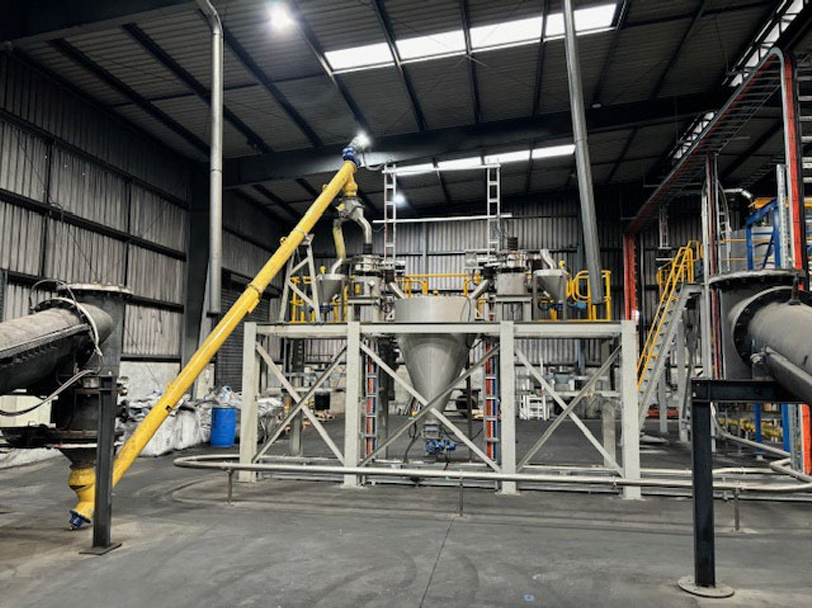
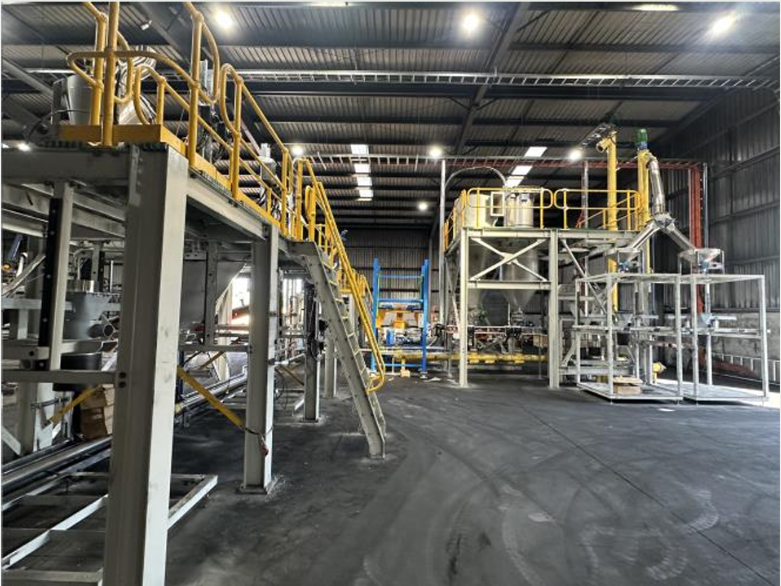
Photos during construction
Interested in learning more?